
It's time to be loud
Plus: A declaration of disabled rights in Aotearoa is coming 📣

Kia ora e hoa mā,
In this week’s delicious edition:
We WILL make a fuss about the Govt’s new Disability Support Services Bill 🔊
Does AI deserve the bad wrap it gets in the arts? 🤖
Department of Internal Affairs backtracks on Lottery Grant criteria 🚨
On Monday, the Government introduced the Disability Support Services Bill, which claims to “provide clarity and stability to the system which supports thousands of disabled New Zealanders.” CCS Disability Action’s piece on the Bill explains its potential impacts and why many disabled people, whānau hauā, and advocates are outraged.
This bill is attempting to sidestep a 2025 landmark Supreme Court decision which ruled that the family members caring for disabled people are considered government employees and should therefore receive the same benefits and protections.
Worryingly, this bill was introduced with no consultation and could also mean disability support funding becomes income tested. Disability Rights Commissioner Prudence Walker is very concerned about the Bill and says legislating to overrule Supreme Court decisions is not a just way for government to work. She added:
”The bill’s aim to define disability support as a ‘contribution’ from the Government is likely to worsen the lives of families already struggling with financial hardship… There is clear evidence showing disabled families are more likely to face poverty."
In its first reading yesterday, the Bill passed with 67 ayes to 55 noes and it’s now before the Select Committee. Notably, several parliamentarians in defence of the Bill labelled the anger and concern around it as “scaremongering”.
Emily Writes said in her fantastic blog the risk of a bill like this is that it stays silent:
This impacts those of us who care for disabled children because we don’t have time to read legislation late into the night when we are preparing for a night of wake-ups for medication or meltdowns… The lack of response then signals to the media that this issue doesn’t matter. And they don’t cover it either. Then the government succeeds in pushing through harmful legislation that destroys lives.
She says while “the Coalition is deliberately making laws in ways that avoid feedback and pushback”, we can still tell anyone and everyone about why this legislation is harmful, and more importantly, encourage them to vote.
✊ With this bill, the tightening of the Total Mobility Scheme, and the mainstreaming of Lotteries Grants, it’s fair to say we’re at greater risk of harm while the Government reorganises its coffers. That’s why we’re hosting two letter-writing sessions to bring us together in sharing our concerns to MPs and anyone who will listen.
📫 We’ll provide letter templates and D*List kaimahi will be available for anyone who needs help writing or filming their response. And of course, we’ll provide hot drinks to keep you going! You can join in-person on Thursday 28 May at 11am-1pm at The D*List Community Hub (322 New North Road, Kingsland), or online on Wednesday 27 May at 6-7pm. RSVP with this form, so that we know what we need to support you.

🧠 With no aged-care or dementia facilities in Wairoa, kaumātua with mate wareware are slipping through the cracks without support. In 2023, Cyclone Gabrielle forced the town’s only rest home to close, and it remains closed today. The Hui interviews carers and community leaders about local programmes, such as Pūteketeke, and other grassroots kaupapa to support kaumātua living in remote areas.
🔎 Lawyer Keegan Jones has designed a rental home listing website called Find My Nest that seeks to make accessible housing easier to find. Te Ao Māori News reports that the platform will prompt landlords to enter information about the property’s accessibility features and give people the option to search by accessibility features. Jones has big dreams for the platform and hopes that it can compete with the likes of Trade Me one day:
“We are also looking at things like proximity to public transport and support services, because accessibility is not just about the four walls, it’s about whether someone can actually live their life from that address.”
🪧 RNZ reports a petition with 13,000 signatures was presented to Parliament on Wednesday, calling for a 5-year-old to be allowed to stay in New Zealand with his family after an autism diagnosis.
🎧 The final episode of season 3 of the podcast, No Such Thing as Normal, hosted by Sonia Gray has been released. The series explores the intersections of neurodivergence and topics such as work, education, gender, perimenopause, and mental health.

🎰 Last week, we published a piece on the removal of the Lottery Grant: Individuals with Disabilities fund. Yesterday, the DIA issued a statement:
“We provided a statement to The D*List last week. As we have continued to work on the new fund purpose, we can confirm that the statement we provided that: ‘individuals will no longer be eligible for funding for items such as mobility vans’ was incorrect. Under the new structure, the intention is that individuals with disabilities will be able to apply for funding from the Lottery Grants Board.
We are working through how this will operate under the new committee structure and will be able to provide more information in July. We apologise for providing incorrect information and for the concern this has caused.”
🩰 What role does AI play in art? In our latest Carving Space column in partnership with Taha Hotu, Suzanne Cowan writes about Abilitopia, a crip-led performance work that reframes interdependence as a creative force. She challenges us to think about AI’s reliance on human coordination, rather than thinking of it as a replacement of human labour.
Abilitopia suggests that when disabled ways of working lead, different values and aesthetics surface: relationship over control, access over perfection, care over speed. Technology and audio description become tools within this ecology of collaboration rather than systems that stand above it. In this sense, the work offers not just a performance, but a small model of how technological futures might be shaped differently.
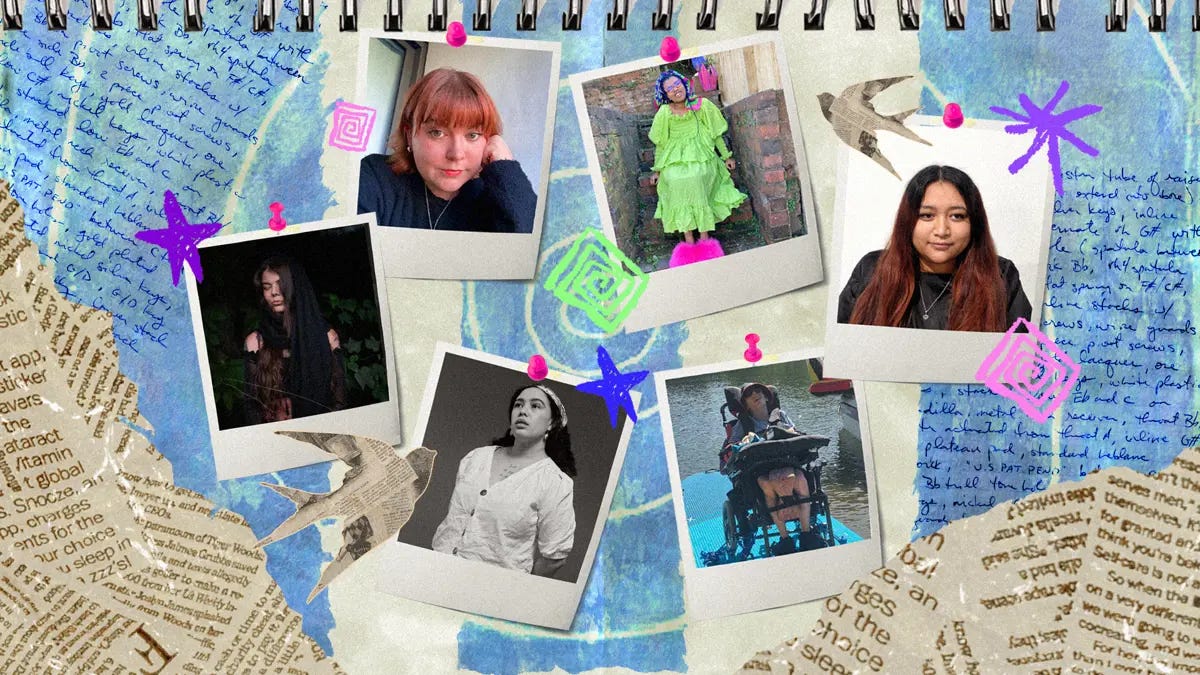
👋 Introducing our community reporters programme! Olivia Shivas writes about the mentors that brought her from a fresh-faced university student to her role now as Editor at The D*List, stressing the importance of programmes that nurture disabled storytellers.
📚 We’ve curated a collection of 17 books by disabled New Zealand authors to add to your reading list. From memoirs to vampire romances, we hope there’ll be something for everyone here.

🗃️ Taha Hotu is creating an accessible, online database of Deaf and disabled writers from Aotearoa and their published work. If you are someone or know someone who would like to be included in the project, make a nomination here. You can nominate writers who have passed, too. This is will a living kaupapa that gets updated as and when new writing is published.
🏀 Festival of Disability Sport is being held in Tauranga this weekend! From wheelchair basketball, to boccia and sailing, this two-day event in the Bay of Plenty is now the biggest disability sporting events in Aotearoa.
✍️ Migrants Against The Acceptable Standard of Health Aotearoa is seeking signatures for their petition to let 16-year-old Paula access the lifesaving medical care he needs while living together with his family in Aotearoa. Soon the family are going to need to seek ministerial intervention to stop him from being at risk of deportation when his visa runs out.
🤝 Finding Common Ground is a collective steering group combining representatives from DPA, EGL, and Te Ao Mārama Aotearoa (TAMA) to make a shared declaration of disabled people’s rights in Aotearoa. You’re invited to contribute by answering their survey before 18th June. The responses will play a part in informing the drafting of a declaration.
On that note, TAMA are looking for tāngata whaikaha Māori and Pasifika to join their Tāmaki Makaurau Pou. If you’re interested, email marama.parore@tama.nz your name, address and phone number.
✊ Mā pango, mā whero, ka oti te mahi ✊
Eda
 |
|
https://our.actionstation.org.nz/petitions/stop-the-discriminatory-bill-removing-disabled-people-s-rights-ensure-fair-due-process
"Does AI deserve the bad wrap it gets in the arts?"
Without a shadow of a doubt. The fact that this is even being brought up is kind of disgusting. AI 'works' by stealing the art of real people. Framing it as a disability access tool is, at best, disingenuous & actively disrespectful toward disabled artists.