
Are we becoming less disabled???🧑🏽🦼➡️🚶🏽➡️
Plus: New doco series Sight Unseen and Aotearoa's first access coordinator

Mauri ora e te whānau! 🌅
What a welcome distraction it has been to have the sounds of chesty waiata, percussive poi, and fiery haka keeping us energised at work. This week is Te Matatini, the biennial national kapa haka competition, also known to some as the “Olympics of kapa haka”.
If you’re lucky enough to be attending the finals tomorrow at the Bowl of Brooklands in Taranaki, there is a dedicated space for whānau hauā and tāngata whaikaha. Come to Te Mata-Waiora marquee for a break, updates, refreshments and support. Whether you’re there in person or watching at home (on TVNZ or Whakaata Māori), there’s live audio description and translation available for finals day tomorrow through Haka Translate on the Te Matatini app.
Yesterday, Stats NZ released new data finding 1 in 6 people living in NZ households are disabled. So what’s happened to our 1 in 4? Has New Zealand become less disabled? ↘️
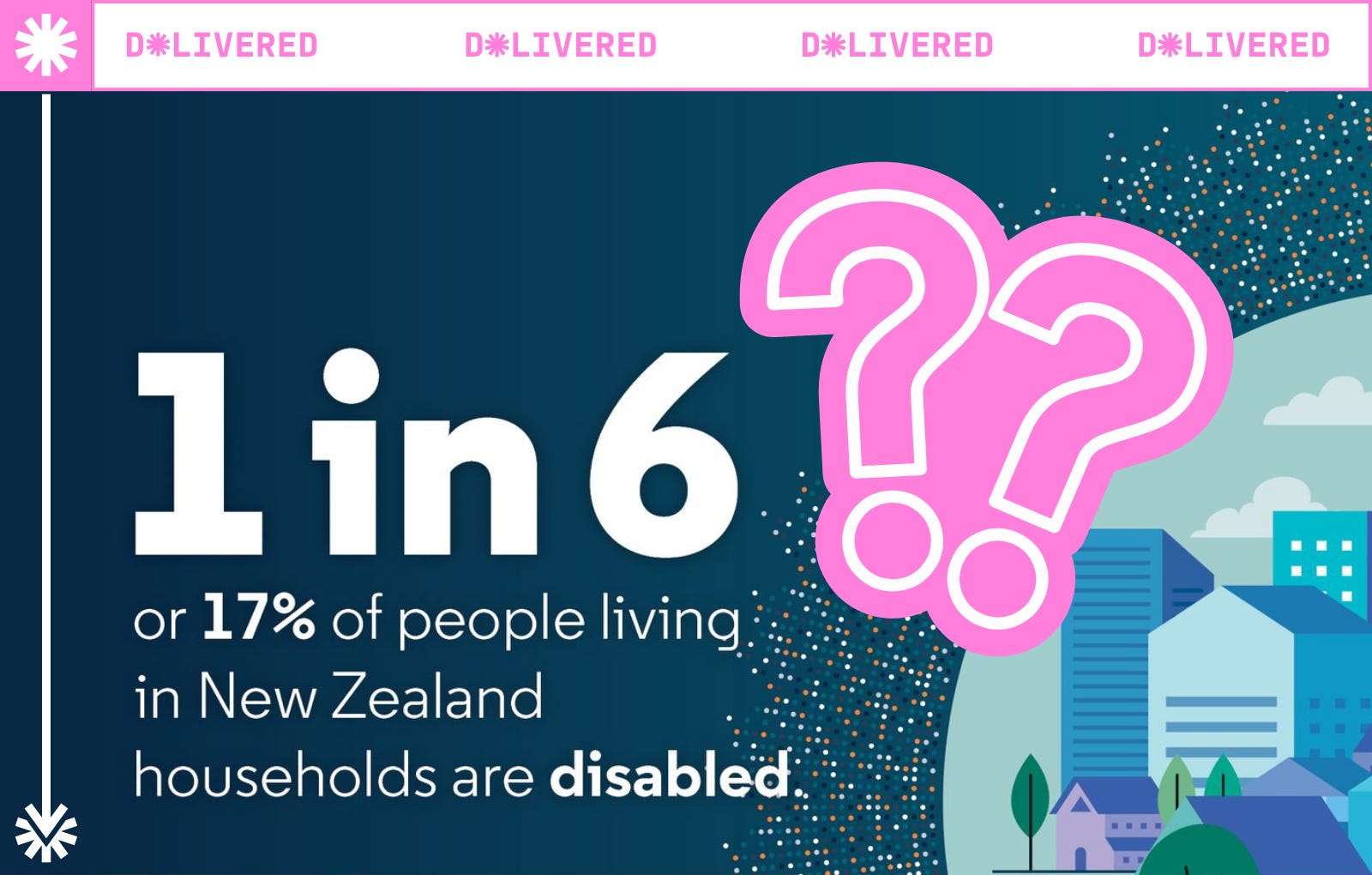
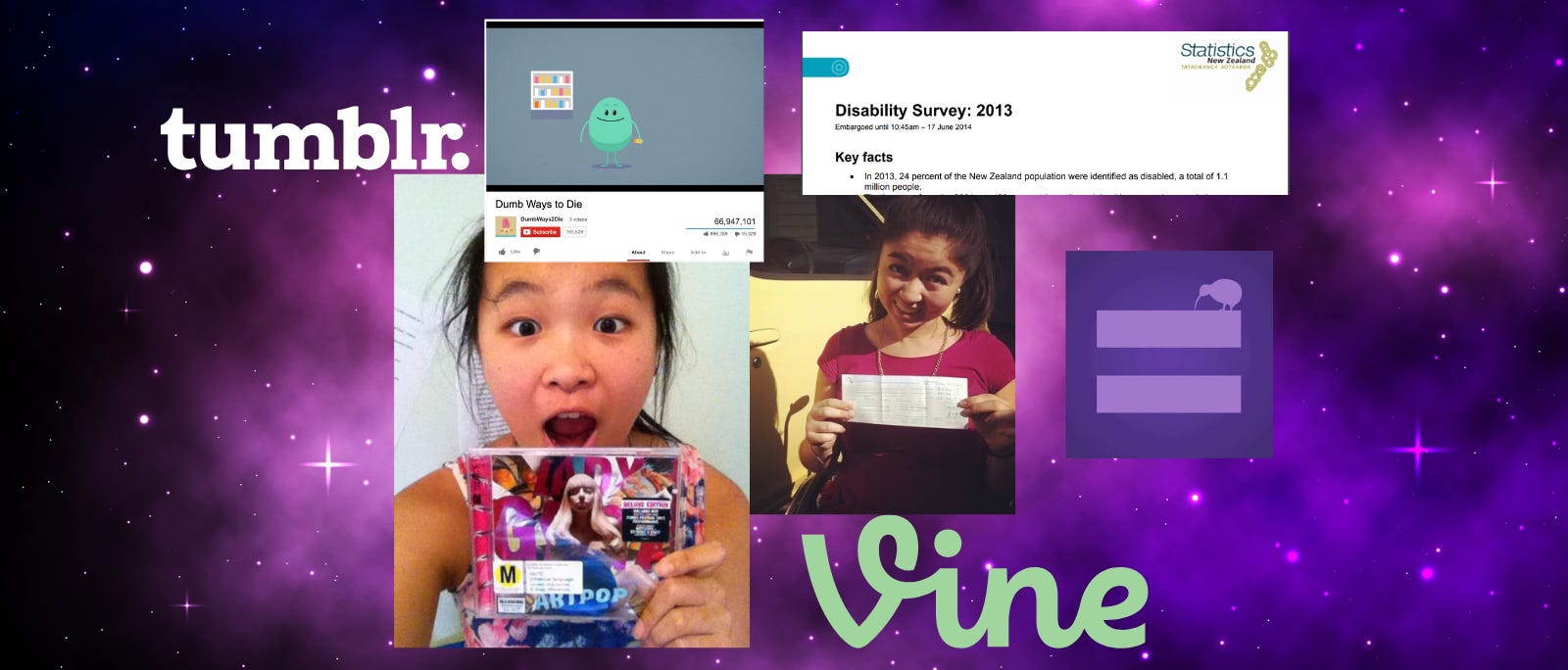
The 1 in 4 figure comes from 2013. Lots has changed since the years my Facebook feed was flooded with Harlem Shake videos and pictures of friends tagged in photos from Kiwiyo; as far as I knew in 2013, I was not disabled. Since 2013, Stats NZ has employed a new system of questions developed by the Washington Group on Disability Studies to identify disability. (If you’re interested in the details, there’s one for adults, and one for children).
This system requires a higher threshold to establish a binary disability status — such as a diagnosis of a certain disabilities, or strong feelings of pain, anxiety, depression, or fatigue most days, if not every day. So there will be many of us, who will not be ‘disabled enough’ under this framework. While the nation is probably not getting any ‘less disabled’, the impact of having less visibility may influence our political power to come. How many times have you read “XYZ is important because 1 in 4 people are disabled?”
The survey does include new data that wasn’t collected in the last survey, including the disability rate of LGBTIQ+* people, which was significantly higher (29%) than the rate for the non-LGBTIQ+ population (17%). (*This is the acronym used in by the survey, although our preference is LGBTQIA+)
This data comes ahead of something else that’s been overdue for a refresh. It’s been 10 years since the New Zealand Disability Strategy was formed. Whaikaha is inviting the voices and experiences of Deaf and disabled people to be a part of working groups that will influence and inform this refresh. ♻️
This requires about 90 hours of time between March - November this year and pays appointees $60/hour. You can express interest by downloading and sending back a form from Whaikaha’s website, or submitting alternative formats to disabilitystrategy@whaikaha.govt.nz. Expressions of interest close on Thursday 6 March.
Before we move on, I have to share some of the brilliant unsolicited advice some of you have received. 💁🏻♀️ If you’ve got any others, do spill the (beef???) tea! ☕️
The most original piece of unsolicited advice was that eating seven gin-soaked raisins a night will cure arthritis - Helen
i get the classics: yoga, essential oil, mindfulness, every diet imaginable, more exercise and when that causes problems, even more exercise - Erin
asking any blind person (who you just met) have we considered getting a guide dog… I think people forget that they're living beings who you actually have to take care of every day, and also that the level of discrimination you get (rideshares, restaurants etc.), even just the logistics, generally goes up markedly with a dog, and also if you're mostly at home etc. it's not really worth it for the dog. - Áine
I’ve received my fair share of peculiar or redundant unsolicited advice for my disabilities; drinking beef tea, collagen supplements, yoga… but one comment stands out because it was right on the money! Having been deteriorating for a few years, I had an auntie reach out sending me a YouTube link for a video about a rare condition which she thought sounded like what I might have. Unbeknownst to her, I had in fact been diagnosed with said rare condition a few weeks prior! Cheers auntie. - Cait

🫠 A man living with a traumatic brain injury was turned away from two different Countdown supermarkets because staff thought he was drunk, reports the NZ Herald. Staff refused entry to Grant Pratt, through the basis of the ‘scab’ (speech, coordination, appearance and behaviour) tool used to identify possibly intoxicated people.
At the hearing in 2023, Pratt disagreed with the statutory definition of intoxication because his disability always affects his appearance, behaviour, coordination and speech. The claim, which was taken to the Human Rights Review Tribunal, was dismissed as it found the supermarket made “the prudent approach” to refuse Pratt’s sale.
Disabled people being mistaken as intoxicated isn’t a new problem. D*List contributor George Hewitt recorded the instances he had to prove he was disabled, not intoxicated, to be let into bars. It also comes up in the Understanding Policing Delivery: Tākata Whaikaha, D/deaf and Disabled report. The report here shows another side of disability-related conduct interpreted as criminal conduct, and recommends that police are trained to recognise different disabilities for fairer procedural practices. So while supermarket staff are trained on the ‘scab’ tool, could they also be trained on recognising and understanding disabilities?
🎒 It’s back to school for many, and Salient, the student magazine of Victoria University of Wellington, has asked students for their tips for navigating university with a disability.
Don’t try and do everything! As much as you want to be just like everyone else and take all those classes and join all those clubs, it’s okay to set limits. If you put too much on your plate, everything suffers. In my first year, I felt like I needed to prove that I could do everything... I would rather do less but do it to a high degree than do more but barely pass.

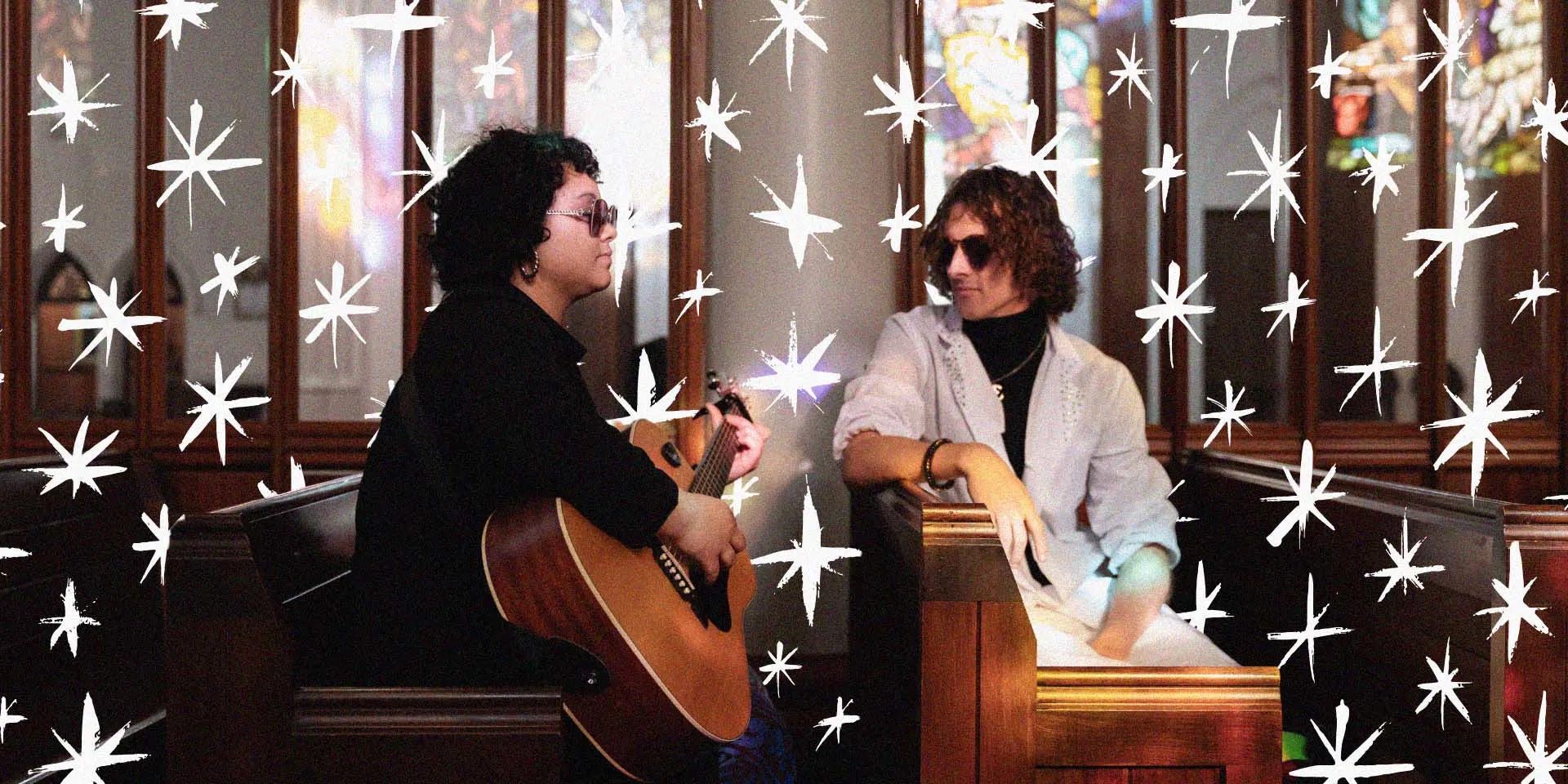
🎬 Stars of the new web doco series, Sight Unseen, Ari Kerssens and Maretta Brown share a conversation on cane use, their love for music and their experiences on set. The five-part documentary, which is audio-described, platforms conversations between young people who are blind or have low vision.
Episodes of Sight Unseen have been going live daily on TikTok and Instagram since Wednesday. All episodes can be viewed at able.co.nz and YouTube from Monday 3 March.
🎷 Gig Buddies, stage ramps, chill zones and earmuffs are helping make music events accessible. William Sangster attended one of the 18 free Music in Parks events in Tāmaki Makaurau and spoke to some satisfied patrons.
♿️ Joegen Daniels wrote about Felicity Hamill, Aotearoa’s first access coordinator! It’s the latest part of her colourful career in production which has included acting as orcs and goblins in Lord of the Rings, being a child stunt double to be a cast driver.
Many disabled cast and crew can be anxious to raise their needs to productions, she says, out of fear of being seen as a ‘problem’ or being replaced. It’s that personal lived experience that Hamill understands well, and says is a requirement for being an access coordinator.
🎂 The National Disabled Students Association celebrates its 5th birthday! Olivia Shivas spoke to current and past presidents about the origin story of a nationwide movement which equips disabled students to thrive.

🌚 Illuminate Night Markets are on in Tāmaki Makaurau on Saturday 1st March at the Mount Albert War Memorial Hall. Run by Recreate NZ, the market features disabled creatives and their innovative products, arts and crafts and talents. Come along between 5-9pm to enjoy fun family activities, live performances and delicious kai!
Yours cordially every Friday,
Eda 🕺
